You close your eyes, drift off, and… that’s it, right? Your body just shuts down for 7-8 hours? Nope. Not even close.
While you’re dreaming about flying or showing up to work in your underwear, your body is pulling an all-nighter. It’s cleaning your brain, repairing muscles, consolidating memories, and doing things so bizarre they sound like science fiction. Let’s dive into the wild world of what happens after lights out.
1. Your Brain Takes Out the Trash — The Glymphatic System
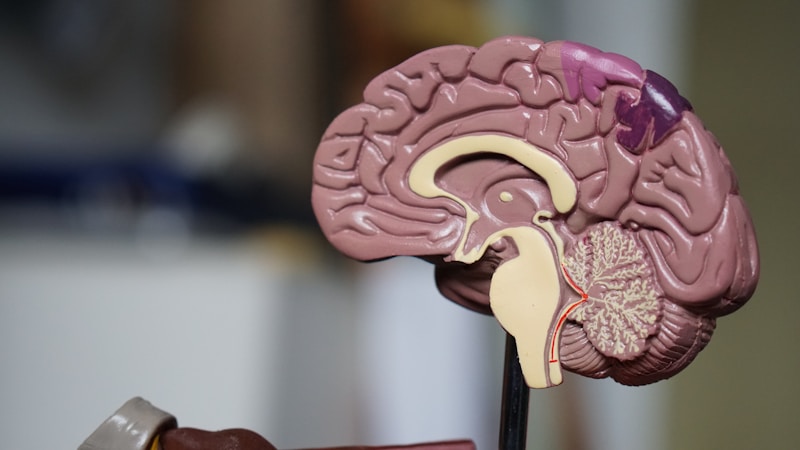
Here’s something incredible: your brain has its own built-in cleaning crew, and it only works the night shift.
It’s called the glymphatic system. During deep sleep, your brain cells actually shrink by about 60%, creating wider channels between them. Cerebrospinal fluid then rushes through these gaps, flushing out toxic waste products — including beta-amyloid, the protein linked to Alzheimer’s disease.
Think of it like a dishwasher for your brain. And here’s the kicker: this cleanup is 10 times more active during sleep than when you’re awake. Skip sleep, and that toxic waste just piles up. Suddenly, that foggy feeling after an all-nighter makes a lot more sense, doesn’t it?
2. You Actually Grow Taller (Seriously)

Measure yourself right before bed, then again first thing in the morning. You’ll find you’re about 1-2 centimeters taller when you wake up.
Why? During the day, gravity compresses the discs in your spine as you walk, sit, and stand. These discs are like little spongy cushions between your vertebrae, and they slowly get squished throughout the day. But when you lie down to sleep, gravity stops pressing down on them. The discs rehydrate and expand, making you measurably taller.
This is also why astronauts in space can grow up to 2 inches taller — no gravity compressing their spines at all! Unfortunately for all of us on Earth, the height boost is temporary. By lunchtime, you’re back to your regular height.
3. Your Muscles Get Completely Paralyzed
This one sounds terrifying, but it’s actually a genius safety feature.
During REM sleep (the dream phase), your brain sends a signal that essentially shuts off your voluntary muscles. This is called sleep atonia. Your eyes can move (that’s the ‘Rapid Eye Movement’ part), and your diaphragm keeps working so you can breathe. But everything else? Locked down.
The reason is simple: without this paralysis, you’d physically act out your dreams. Imagine punching the air, running in bed, or trying to fly off your mattress. Sleep atonia keeps you (and your sleeping partner) safe.
When this system glitches, it can result in sleepwalking (muscles aren’t paralyzed enough) or sleep paralysis (you wake up but the paralysis hasn’t worn off yet). Both are harmless but can be absolutely terrifying.
4. Your Brain Replays the Day Like a Highlight Reel

Ever noticed how things just “click” after a good night’s sleep? You study for a test, sleep on it, and suddenly the material makes more sense? That’s not a coincidence.
During sleep, your brain performs memory consolidation. It replays the experiences and information from your day, transferring them from short-term memory (the hippocampus) to long-term storage (the cortex). It’s like your brain is organizing files, deciding what to keep and what to delete.
Researchers at MIT found that rats’ brains replay the exact same neural patterns during sleep that they experienced while running through a maze earlier that day — but at 20 times the speed. Your brain essentially fast-forwards through your day every single night.
This is why pulling an all-nighter before an exam is one of the worst study strategies. Without sleep, your brain never gets to properly file away what you learned.
5. Your Immune System Goes Into Beast Mode

Ever wonder why doctors always say “get plenty of rest” when you’re sick? It’s not just a polite suggestion — there’s hard science behind it.
During sleep, your immune system releases proteins called cytokines. Some of these cytokines need to increase when you have an infection or inflammation. Sleep deprivation actually decreases the production of these protective proteins.
But it gets even more interesting. Your body also produces more T-cells during sleep — the killer cells that hunt down and destroy virus-infected cells. A study found that people who slept less than 6 hours a night were 4.2 times more likely to catch a cold compared to those who got 7+ hours.
Your body isn’t just resting during sleep. It’s building an army.
Bonus Fact: You Lose Weight While Sleeping
You actually lose about 1-2 pounds overnight just by breathing and sweating. Every exhale releases water vapor and CO2 — the byproducts of your metabolism burning through calories. You also sweat about a cup of water throughout the night, even if you don’t feel it. So technically, sleeping IS a workout. (Okay, not really. But still cool.)
The Bottom Line
Sleep isn’t downtime — it’s your body’s most productive shift. While you’re completely unaware, your brain is detoxing itself, your spine is decompressing, your muscles are wisely paralyzed, your memories are being organized, and your immune system is gearing up for battle.
So the next time you feel guilty about sleeping in on a Saturday, don’t. Your body has a massive to-do list, and it needs every minute of shut-eye to get through it.
Sleep isn’t lazy. Sleep is survival.
Sources
- Xie, L. et al. (2013). Sleep drives metabolite clearance from the adult brain. Science, 342(6156).
- Stickgold, R. (2005). Sleep-dependent memory consolidation. Nature, 437(7063).
- Prather, A.A. et al. (2015). Behaviorally assessed sleep and susceptibility to the common cold. Sleep, 38(9).
- Brooks, A. & Lack, L. (2006). A brief afternoon nap following nocturnal sleep restriction. Psychophysiology, 43(5).