You’re in the middle of a completely normal conversation. Maybe you’re sitting at a café, or walking through a hallway, or listening to a friend tell a story. And then it hits you — a sudden, overwhelming feeling that you’ve experienced this EXACT moment before.
Every detail feels familiar. The words. The lighting. The way someone tilts their head. It’s like watching a movie you’ve already seen, except you KNOW you haven’t.
This is déjà vu — French for “already seen” — and roughly 60–70% of people experience it at least once in their lives. But what’s actually happening inside your brain when this eerie sensation strikes? The answer is way more fascinating (and slightly unsettling) than you might think.
1. The Dual Processing Theory: Your Brain’s Timing Glitch
The most widely accepted scientific explanation for déjà vu is surprisingly simple: it’s a timing error in your brain.
Normally, when you experience something new, your brain processes the information and stores it as a memory simultaneously. Perception and memory formation happen in perfect sync.
But sometimes, there’s a tiny delay — a millisecond glitch — where your brain stores the memory BEFORE you consciously perceive the experience. So when the conscious perception catches up a fraction of a second later, your brain says: “Wait, I already have a memory of this.”
It’s not that you’ve actually lived this moment before. Your brain just filed it in the “memory” folder before you experienced it in the “present” folder. A classic filing error.
- Normal process: Experience → Memory (simultaneous)
- Déjà vu: Memory → Experience (memory fires first)
- Result: Brain interprets the present as a past memory

2. The Hologram Theory: Partial Pattern Matching Gone Wrong
Your brain is essentially a pattern-recognition machine. It’s constantly comparing what you see, hear, and feel to stored memories — looking for matches.
Déjà vu may happen when your current environment partially matches a stored memory, but your brain can’t identify WHICH memory it’s matching to.
Imagine you walk into a restaurant you’ve never been to. But the layout is eerily similar to a restaurant you visited 5 years ago — same color walls, similar table arrangement, comparable lighting. Your brain detects the pattern match, but can’t pull up the specific memory.
The result? Instead of thinking “this reminds me of that Italian place in 2021,” your brain generates the feeling of “I’ve BEEN here before” — without being able to explain why.
Dr. Anne Cleary at Colorado State University tested this experimentally by creating virtual reality environments that shared spatial layouts with previously shown scenes. Participants who couldn’t recall the original scene were significantly more likely to report déjà vu in the matching environment.
3. The Temporal Lobe Connection: When Your Brain Short-Circuits
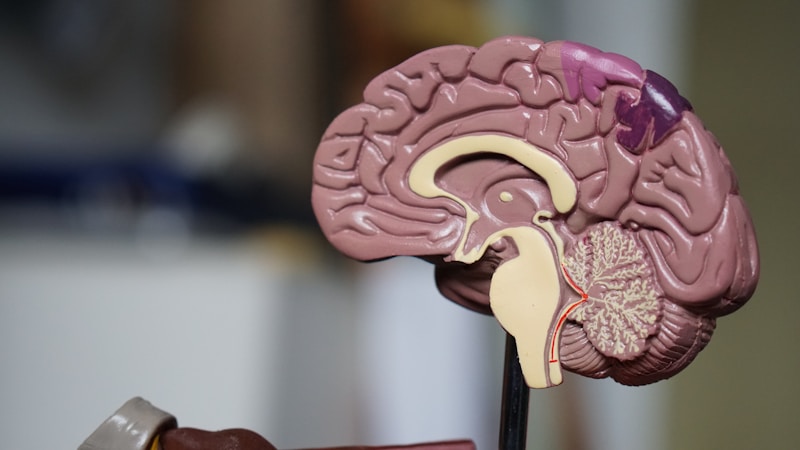
Here’s where things get really interesting — and a little creepy. Déjà vu has a strong connection to the temporal lobe, the part of your brain that handles memory, emotion, and sensory processing.
People with temporal lobe epilepsy report experiencing intense, prolonged déjà vu as a warning sign (aura) right before a seizure. This gave neuroscientists a huge clue about what’s happening.
Brain scans during déjà vu episodes show unusual electrical activity in the temporal lobe — specifically in the hippocampus (memory center) and the surrounding cortex. It’s essentially a mini electrical misfire that tricks your brain into activating a “recognition” signal without an actual matching memory.
- Hippocampus: Fires a false “I remember this” signal
- Parahippocampal cortex: Generates the feeling of familiarity
- Prefrontal cortex: Tries (and fails) to find the actual memory source
Think of it like your brain’s smoke detector going off when there’s no fire. The alarm system works — it’s just responding to a false trigger.

4. Why Do Young People Get Déjà Vu More Often?
Here’s something most people don’t know: déjà vu peaks in frequency between ages 15 and 25, then gradually decreases as you age.
Scientists believe this is because young brains are still developing and forming neural pathways. More active neural development means more opportunities for “wiring glitches.”
Other factors that increase déjà vu frequency include:
- Fatigue and stress: Tired brains make more processing errors
- Travel: New environments create more partial pattern matches
- Higher education: People with more education report déjà vu more often (possibly because they’re more attentive to their mental states)
- Imagination and creativity: Vivid imaginers experience it more frequently
Interestingly, déjà vu is LESS common in people under 8 and over 65 — supporting the idea that it’s tied to active brain development and neuroplasticity.

5. The Matrix Theory: Is Déjà Vu a Glitch in Reality?
OK, let’s address the elephant in the room. Could déjà vu be evidence that we’re living in a simulation? That reality “glitched” and repeated itself?
While this is a fun thought experiment (and great movie material), science has a much more grounded explanation. But here’s what makes déjà vu truly fascinating from a philosophical standpoint:
Déjà vu reveals something profound about how fragile our sense of reality actually is. Your entire experience of “now” is constructed by your brain — and when that construction process hiccups, even for a millisecond, your entire sense of time and familiarity can be thrown off.
Some researchers, including Dr. Akira O’Connor at the University of St Andrews, believe déjà vu might actually be your brain’s fact-checking system at work. When the false memory signal fires, your frontal cortex detects the conflict between “I remember this” and “this is new” — and the weird feeling IS your brain catching its own error.
In other words, déjà vu might not be a bug. It might be your brain’s built-in error-correction system doing its job.

🌟 Bonus Facts
- The opposite of déjà vu is “jamais vu” — when something familiar suddenly feels completely foreign (like staring at a common word until it looks wrong)
- “Presque vu” (“almost seen”) is the tip-of-the-tongue feeling when a word is right there but you can’t retrieve it
- Animals may experience déjà vu too — studies show rats have similar hippocampal misfires during memory tasks
- Déjà vu episodes typically last only 10–30 seconds, though they feel much longer
- Chronic, intense déjà vu can be a sign of temporal lobe epilepsy — if it happens frequently, see a neurologist
- Blind people experience déjà vu too, proving it’s not just a visual phenomenon but a multi-sensory memory glitch
The Bottom Line
Déjà vu isn’t a supernatural experience, a premonition, or a glitch in the Matrix. It’s your brain briefly confusing the present with a memory — a tiny timing error in the most complex organ in the known universe.
But here’s what’s truly incredible: the fact that your brain can catch this error in real-time and make you AWARE that something feels off is actually a sign of a healthy, well-functioning brain.
So next time déjà vu hits and you get that spine-tingling “I’ve been here before” feeling — don’t panic. Just appreciate the fact that you’re witnessing one of the coolest glitches in human neuroscience.
📚 Sources
- Dr. Anne Cleary, Colorado State University — Recognition memory and déjà vu in virtual reality (Current Directions in Psychological Science, 2008)
- Dr. Akira O’Connor, University of St Andrews — Déjà vu as a metacognitive signal (Cortex, 2017)
- Neurology Journal — Temporal lobe epilepsy and déjà vu auras
- Scientific American — The Neuroscience of Déjà Vu
- Brown, A.S. — The Déjà Vu Experience: Essays in Cognitive Psychology (Psychology Press, 2004)