You’ve been in the bath or pool for a while, and you look down at your hands. Your fingertips look like tiny, sad raisins. We’ve all been there. Most of us just accepted it as “skin absorbing water” and moved on with our lives.
But here’s the thing — that explanation is completely wrong. The real reason your fingers wrinkle in water is way more interesting, and it involves your nervous system, evolution, and maybe even a survival advantage that helped your ancestors stay alive.
Ready to have your mind blown by your own fingertips? Let’s go.
The Old Explanation: Osmosis? Nope.

For decades, people (including scientists) assumed that pruney fingers were caused by osmosis — water seeping into the outer layer of your skin, causing it to swell and wrinkle. It made intuitive sense. Skin + water = wrinkles. Simple, right?
But there was a huge problem with this theory. In the 1930s, doctors noticed something strange: patients with nerve damage in their fingers didn’t get wrinkly in water. If it were purely osmosis — a passive physical process — nerve damage shouldn’t matter at all. Water doesn’t care about your nerves.
This was a game-changer. It meant that pruney fingers aren’t a passive reaction to water. They’re an active response controlled by your nervous system. Your body is deliberately making your fingers wrinkle. But why?
The Real Cause: Your Nervous System Is in Control
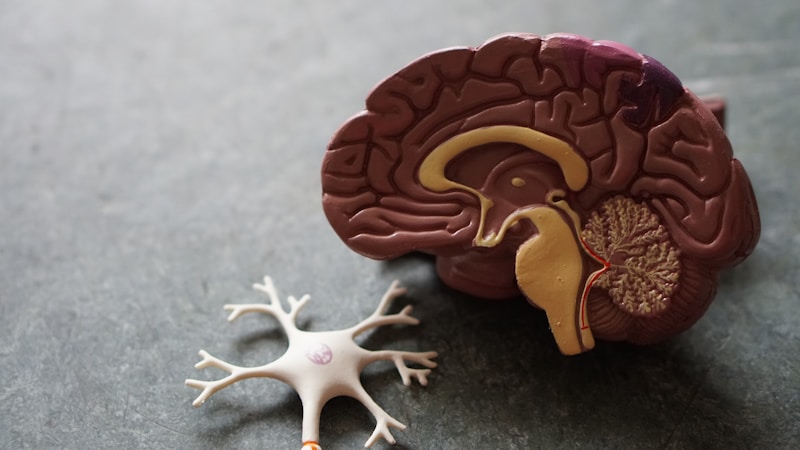
Here’s what actually happens. When your fingers are submerged in water for an extended period, the nerve fibers in your fingertips detect the moisture and send a signal through your sympathetic nervous system — the same system that controls your fight-or-flight response, heart rate, and sweating.
This signal causes the blood vessels beneath your skin to constrict (vasoconstriction). When the blood vessels shrink, the volume of the fingertip decreases slightly, but the skin on top stays the same size. The result? The skin folds into those characteristic wrinkles, like a deflated balloon.
Think of it like this: imagine you’re wearing a glove that fits perfectly. Now imagine your hand shrinks a tiny bit while the glove stays the same size. The extra glove material would bunch up and form wrinkles. That’s essentially what’s happening with your skin.
The process typically takes about 3-5 minutes of continuous water exposure. And once you remove your hands from water, the blood vessels dilate again, the fingertip plumps back up, and the wrinkles disappear within minutes. It’s a completely reversible, controlled process.
The Evolutionary Theory: Built-In Rain Tires

So your body is deliberately wrinkling your fingers in water. But evolution doesn’t do things without a reason (usually). So what’s the advantage?
In 2013, a team of researchers from Newcastle University published a fascinating study in the journal Biology Letters. They hypothesized that wrinkly fingers function like rain treads on tires — they channel water away from the fingertips, improving grip on wet objects.
To test this, they had participants pick up wet marbles with either dry, smooth fingers or water-wrinkled fingers. The result? People with wrinkled fingers were significantly faster and more accurate at handling wet objects. The wrinkles created tiny channels that allowed water to drain away from the contact point, increasing friction and grip.
Think about it from an evolutionary perspective. Our ancestors needed to:
- Gather food in wet conditions: Collecting wet plants, fruits, or shellfish from streams and riverbanks would have been much easier with better grip.
- Move safely on wet surfaces: Wrinkled toes (yes, toes do it too!) would provide better traction on wet rocks and muddy terrain.
- Handle tools in rain: Maintaining grip on stone tools or wooden spears during rainfall could mean the difference between eating and going hungry.
The pattern of the wrinkles even supports this theory. They’re not random. The wrinkles form in a specific, branching pattern that’s optimized for water drainage — remarkably similar to the drainage channels engineered into car tires and the soles of hiking boots.
Wait — Does It Actually Help? The Debate Continues

Here’s where it gets complicated. Science is never as neat as we’d like it to be.
While the 2013 Newcastle study showed a clear benefit for wrinkled fingers with wet objects, follow-up studies have produced mixed results. A 2014 study published in PLOS ONE tried to replicate the findings and found no significant difference in grip between wrinkled and non-wrinkled fingers.
Other researchers have pointed out potential issues:
- Sensitivity trade-off: Wrinkled fingers might improve grip but decrease tactile sensitivity. You might hold onto the wet rock better, but you’d feel less of what you’re touching.
- Injury risk: The constricted blood vessels mean less blood flow to the fingertips, potentially making them more vulnerable to damage.
- Time delay: It takes several minutes for wrinkles to form. If you fell into water suddenly, your fingers wouldn’t wrinkle fast enough to help you.
So the evolutionary advantage theory is compelling but not definitively proven. It’s possible that wrinkly fingers are indeed an adaptation for wet grip. Or it could be a byproduct of the vasoconstriction response that happens to be somewhat useful. The scientific jury is still out.
Pruney Fingers as a Medical Diagnostic Tool
Here’s something unexpected: doctors actually use the finger-wrinkling response as a diagnostic tool. Since we know that wrinkling requires intact nerve function, the absence of wrinkling can indicate nerve damage.
If you injure a nerve in your hand and your fingers stop wrinkling in water, it tells doctors exactly which nerve is affected. It’s actually one of the simplest and most reliable tests for sympathetic nerve function — no fancy equipment needed, just a bowl of water and a few minutes.
This “water immersion test” has been used to assess nerve damage from conditions like:
- Carpal tunnel syndrome
- Diabetic neuropathy
- Nerve lacerations from injuries
- Leprosy (Hansen’s disease)
- Stroke-related nerve damage
Some researchers have even suggested it could be an early screening tool for type 2 diabetes, since diabetic neuropathy can reduce the wrinkling response before other symptoms appear. Your pruney fingers might literally be a window into your nervous system’s health.
Bonus Fact: Only Fingers and Toes — But Why?
Ever noticed that only your fingers and toes wrinkle in water, not the rest of your skin? That’s because the skin on your palms and soles is uniquely structured. It has a much thicker outer layer (stratum corneum) and is firmly anchored to the tissue beneath it by a dense network of collagen fibers.
When the blood vessels constrict, this thick, anchored skin can’t just shrink uniformly — it has to fold and wrinkle. The rest of your body’s skin is thinner and more flexible, so the same vasoconstriction doesn’t produce visible wrinkles. Your fingers and toes are basically the only parts of your body with the right skin architecture for this trick.
The Bottom Line
What seems like a simple, annoying side effect of bath time is actually a sophisticated biological response controlled by your nervous system. Your fingers aren’t just passively absorbing water — your brain is actively reshaping them, potentially giving you better grip in wet conditions.
From evolutionary survival advantages to modern medical diagnostics, these tiny wrinkles pack a surprising punch. Next time you look at your pruney fingers after a long shower, remember: your body has been running this program for millions of years, fine-tuned by evolution and controlled by your autonomic nervous system.
Not bad for something most people dismiss as “just a water thing.”
Sources
- Wilder-Smith, E.P. & Chow, A. (2003). Water-immersion wrinkling is due to vasoconstriction. Muscle & Nerve.
- Kareklas, K., Nettle, D., & Smulders, T.V. (2013). Water-induced finger wrinkles improve handling of wet objects. Biology Letters.
- Haseleu, J., et al. (2014). Water-induced finger wrinkles do not affect touch acuity or dexterity in handling wet objects. PLOS ONE.
- Changizi, M., Weber, R., Kotecha, R., & Palazzo, J. (2011). Are wet-induced wrinkled fingers primate rain treads? Brain, Behavior and Evolution.