There’s something deeply satisfying about cracking your knuckles. You interlace your fingers, push them outward, and — pop, pop, pop — a chain of little explosions erupts from your hands. It feels great. It sounds weird. And it’s probably annoyed at least one person sitting near you.
But have you ever stopped to wonder what’s actually making that noise? Is it your bones grinding together? Your tendons snapping? Is it secretly destroying your joints? (Spoiler: probably not.)
The science behind knuckle cracking is actually way cooler than you’d expect. It involves gas bubbles, synovial fluid, and even an MRI study that settled a decades-old debate. Let’s pop into it — pun absolutely intended.

What’s Actually Happening Inside Your Joints?
To understand the crack, you first need to understand what’s going on inside your joints. Your finger joints (and most of your other joints) are surrounded by a capsule filled with a thick, clear liquid called synovial fluid. Think of it as your body’s natural WD-40 — it keeps your joints lubricated, reduces friction, and provides nutrients to the cartilage.
This synovial fluid contains dissolved gases — mostly carbon dioxide, nitrogen, and oxygen. These gases are suspended in the fluid, kind of like how carbon dioxide is dissolved in a sealed can of soda. Everything stays nice and calm… until you apply force.
When you pull, bend, or stretch your finger joint, you increase the space inside the joint capsule. This sudden expansion drops the pressure inside — and just like opening that can of soda, the dissolved gases come rushing out of solution and form a bubble. The rapid formation of this gas bubble is what creates that signature popping sound.
This process is called cavitation, and it’s the same physics principle that explains why boat propellers sometimes make crackling noises underwater. Your joints and boat propellers — connected by science.
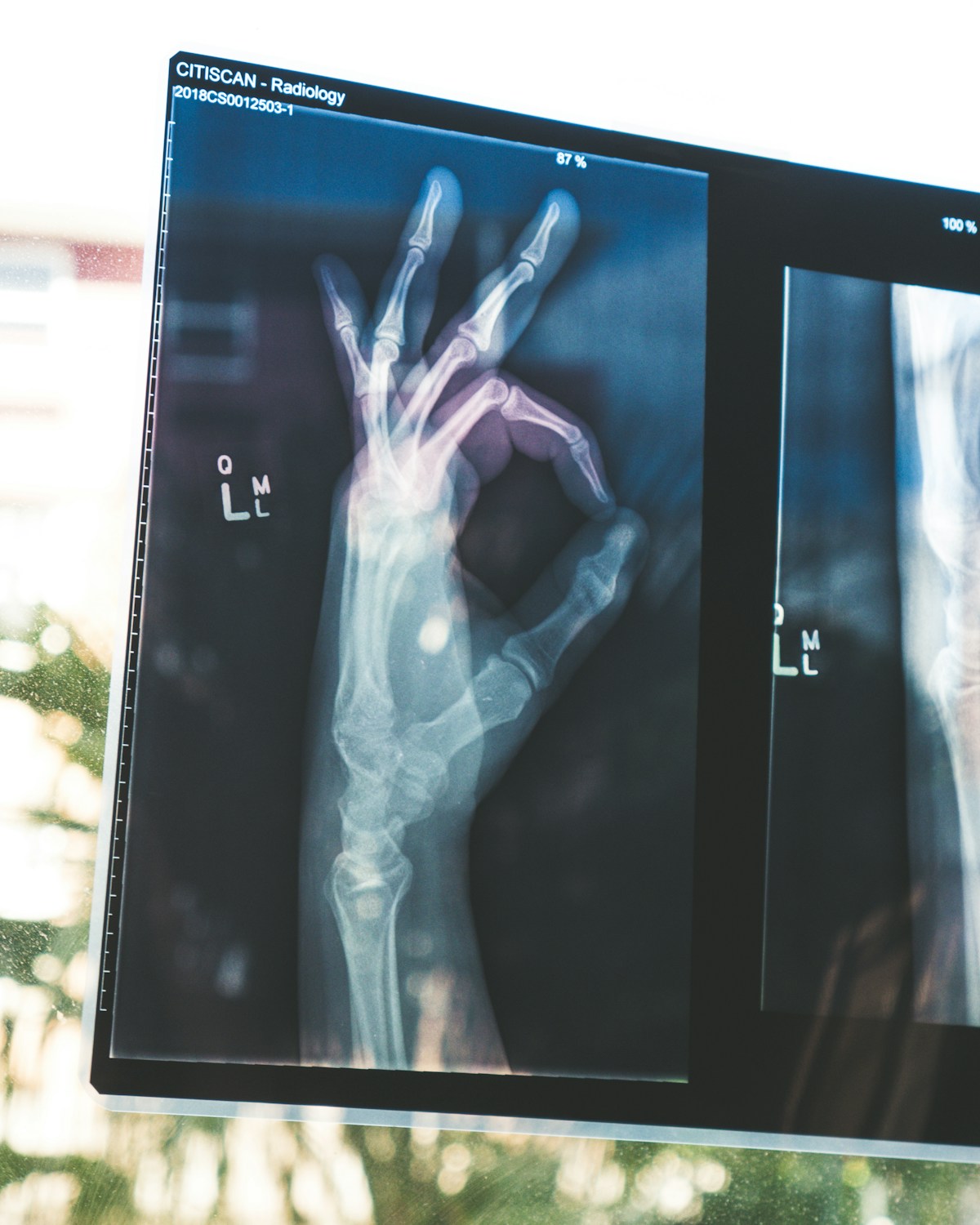
The Great Debate — Bubble Formation vs. Bubble Collapse
For decades, scientists argued about whether the cracking sound came from bubbles forming or bubbles collapsing. The original 1947 theory by two UK researchers suggested the sound came from bubble formation. Then a 1971 study flipped the script, claiming it was actually the bubble collapsing back into the fluid that produced the pop.
This debate raged for over 40 years until a game-changing 2015 study settled it — with an MRI machine. Researchers at the University of Alberta literally filmed a knuckle crack in real time using MRI. The lead researcher, Greg Kawchuk, recruited a colleague who was a particularly talented knuckle cracker (yes, that was the scientific selection criteria) and watched the entire process unfold.
What they saw was remarkable. The crack sound happened at the exact moment a bright flash appeared in the joint space — the formation of a gas bubble. The bubble didn’t collapse. It formed, and the sound happened simultaneously with its creation. The 1947 team was right all along.
The study, published in PLOS ONE, was appropriately titled “Pull My Finger” — because scientists have a sense of humor too. However, a 2018 study from France using mathematical modeling suggested the sound might come from the partial collapse of the bubble. So while we’re much closer to an answer, the exact acoustics are still being refined. Science is a process, not a destination.
Does Cracking Your Knuckles Cause Arthritis? (The Myth That Won’t Die)
OK, let’s address the elephant in the room. Your grandmother probably warned you that cracking your knuckles would give you arthritis. Your teacher might have told you the same thing. Maybe even your doctor winced when you did it in their office.
But here’s the thing: there’s no scientific evidence that cracking your knuckles causes arthritis.
The most legendary study on this topic was conducted by Dr. Donald Unger, a California allergist who cracked the knuckles on his left hand at least twice a day for over 60 years — while deliberately leaving his right hand alone. After six decades of this one-man experiment, he found zero difference in arthritis between his two hands. He published his results and was awarded the 2009 Ig Nobel Prize in Medicine — an award for research that “first makes you laugh, then makes you think.” Absolute legend.
Larger studies have backed him up. A 2011 study published in the Journal of the American Board of Family Medicine surveyed 215 people aged 50–89 and found no correlation between habitual knuckle cracking and osteoarthritis in the hand joints.
That said, there is some evidence that excessive, forceful knuckle cracking over long periods might lead to slightly reduced grip strength or minor soft tissue swelling. But arthritis? The data just doesn’t support it.

Why Does It Feel So Darn Good?
If cracking your knuckles isn’t harmful, why does it feel like it’s doing something? There are a few theories.
First, when you crack a joint, you’re stretching the joint capsule and the surrounding ligaments. This activates stretch receptors — sensory nerves that respond to changes in position and tension. The activation of these receptors can create a feeling of release or looseness in the joint, even if nothing structurally changed.
Second, the act of stretching your fingers feels good on its own. If you’ve been typing for hours or gripping something tightly, your joints can feel stiff. The stretching motion that comes with cracking provides a mini range-of-motion exercise that genuinely helps.
Third, there may be a psychological component. Cracking your knuckles is a habit, and like many habits, it’s self-reinforcing. The ritual of crack → satisfying pop → feeling of relief creates a loop that your brain wants to repeat.
And finally, there’s the 15–20 minute refractory period. After you crack a joint, it takes about 15–20 minutes before you can crack it again. That’s because the gas bubble needs time to dissolve back into the synovial fluid before a new one can form. This built-in cooldown might actually contribute to the “reward” feeling — anticipation makes the next crack even more satisfying.

Bonus Facts That’ll Make You Go ‘Pop’
- Not everyone can crack their knuckles — it depends on joint anatomy and the composition of your synovial fluid
- The “refractory period” after cracking is about 15–20 minutes as the gas dissolves back into the fluid
- Knuckle cracking is estimated at about 83 decibels — roughly as loud as a diesel truck idling
- Chiropractors use the same cavitation principle when they adjust your spine — those pops are the same physics
- About 25–54% of people crack their knuckles habitually, with men doing it slightly more often than women
- The MRI study that resolved the 40-year debate was literally titled “Pull My Finger” — peak science humor
The Bottom Line
So the next time someone tells you to stop cracking your knuckles, you can hit them with the science. That satisfying pop is just gas bubbles forming in your synovial fluid — a perfectly natural, utterly harmless physical phenomenon. You’re not grinding your bones, you’re not damaging your cartilage, and you’re definitely not giving yourself arthritis.
Knuckle cracking is one of those beautiful little quirks of human anatomy — a tiny, built-in sound effect that your body produces for free. It’s physics, it’s chemistry, and honestly, it’s kind of impressive.
Now if you’ll excuse us, we need to go crack every joint in our body. For science, obviously.

Sources
- Kawchuk, G.N. et al. (2015). “Real-Time Visualization of Joint Cavitation.” PLOS ONE, 10(4), e0119470.
- Unger, D.L. (1998). “Does knuckle cracking lead to arthritis of the fingers?” Arthritis & Rheumatism, 41(5), 949-950.
- Deweber, K. et al. (2011). “Knuckle Cracking and Hand Osteoarthritis.” Journal of the American Board of Family Medicine, 24(2), 169-174.
- Boutin, R.D. et al. (2017). “Knuckle Cracking: Can It Cause Joint Damage?” Radiological Society of North America.
- Chandran Suja, V. & Barakat, A.I. (2018). “A Mathematical Model for the Sounds Produced by Knuckle Cracking.” Scientific Reports, 8, 4600.