You’re sitting in a meeting, doing your absolute best to stay focused, when the person across from you lets out a massive, jaw-stretching yawn. And then — like clockwork — your mouth opens wide, your eyes squeeze shut, and you’re yawning too. You didn’t even feel tired a second ago. What just happened?
If this sounds familiar, you’re not alone. Scientists estimate that about 60–70% of people are susceptible to contagious yawning. Even reading about yawning or looking at pictures of people yawning can trigger the reflex. (In fact, there’s a decent chance you’ve already yawned just reading this intro. We see you.)
Turns out, contagious yawning is one of the most fascinating and surprisingly complex quirks of the human body. Researchers have been studying it for decades, and the explanations involve everything from brain temperature regulation to mirror neurons to deep-wired empathy circuits. Let’s break it all down.

What Actually Happens When You Yawn?
Before we get into the “contagious” part, let’s talk about yawning itself. At its core, a yawn is an involuntary reflex where you open your mouth wide, take a deep, lung-filling breath of air, and then slowly exhale. During this process, your jaw stretches to its limits, your eardrums tighten, and your eyes might even water a little. The whole thing lasts about 6 seconds on average.
For the longest time, the prevailing theory was that yawning was simply about getting more oxygen into your system. The idea was simple: you’re tired, your breathing slows down, your blood oxygen drops, and a big yawn brings everything back up. Sounds logical, right? Well, research has mostly debunked this theory.
A groundbreaking 2007 study by Andrew Gallup at the University of Albany proposed something way more interesting: yawning might actually be a brain-cooling mechanism. Here’s the logic — your brain operates best within a narrow temperature range. When it starts getting a little too warm (from concentration, stress, or fatigue), a big yawn draws in cooler air through your nasal and oral passages, increasing blood flow to the brain and literally cooling it down. Think of it as your body’s built-in CPU fan.
This theory is supported by the fact that people yawn more in warm environments than in cold ones. If yawning were just about oxygen, temperature wouldn’t matter. But it does — a lot. So the next time someone accuses you of yawning because you’re bored, tell them your brain is just running hot. You’re welcome.
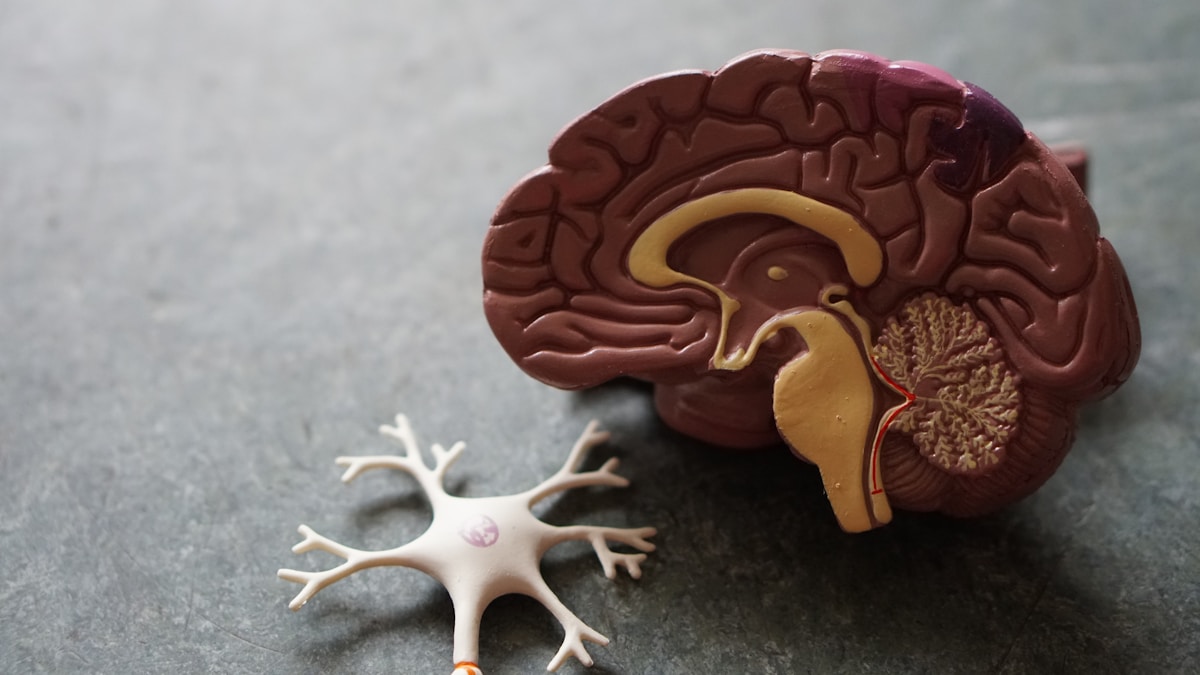
Mirror Neurons — Your Brain’s Copy-Paste Function
OK so now we know why we yawn. But why do we yawn when we SEE someone else yawn? This is where it gets seriously cool.
Your brain contains specialized cells called mirror neurons. These remarkable little neurons fire both when you perform an action AND when you watch someone else perform that same action. They’re the reason you flinch when you watch someone stub their toe, why you instinctively smile when someone smiles at you, and why watching cooking videos can literally make your mouth water.
When you see someone yawn — whether in person, on a screen, or even in a photo — your mirror neurons light up like a Christmas tree. They send a signal to your primary motor cortex (the part of your brain that controls movement) that essentially says, “Hey, that person is yawning. We should probably do that too!” And before your conscious mind can even weigh in, the yawn is already happening.
A landmark 2017 study published in Current Biology by researchers at the University of Nottingham took this even further. Using transcranial magnetic stimulation (TMS), they found that the urge to yawn when seeing someone else do it is rooted in the primary motor cortex — and here’s the kicker: the more you try to suppress a yawn, the stronger the urge becomes. Your brain literally rebels against your attempt to hold it in.
So if you’ve ever been in a formal setting, desperately trying not to yawn, and felt the urge become almost unbearable — that’s not weakness. That’s neuroscience.

The Empathy Connection
This is where things get really, genuinely fascinating. Multiple studies over the past two decades have found a strong connection between contagious yawning and empathy — your ability to understand and share the feelings of others.
Think about it: contagious yawning requires you to unconsciously mirror someone else’s behavior. That’s basically empathy in its most primal, automatic form.
A pivotal 2011 study by Italian researchers Ivan Norscia and Elisabetta Palagi, published in PLOS ONE, tracked yawning patterns in over 100 adults across various social settings. Their findings were striking: contagious yawning was most frequent between close friends and family members, less common among acquaintances, and rare between complete strangers. The emotional closeness between two people was the strongest predictor of contagious yawning — more than physical proximity, time of day, or any other factor.
This empathy connection also explains some other interesting patterns. People who score higher on empathy assessments are consistently more susceptible to contagious yawning. Young children under the age of 4 — whose empathy circuits are still developing — rarely show contagious yawning. And some research has found that individuals on the autism spectrum, who may process social cues differently, show different patterns of contagious yawning as well.
Perhaps most intriguingly, a 2015 study at Baylor University found that individuals with psychopathic personality traits — characterized by reduced empathy — showed significantly less contagious yawning. The researchers were careful to note this doesn’t mean that not yawning makes you a psychopath. But it does highlight just how deeply contagious yawning is wired into our social and emotional circuitry.

Even Animals Catch Yawns — And It’s Adorable
If you thought contagious yawning was a humans-only phenomenon, prepare to have your mind blown. It turns out, our furry (and feathery) friends catch yawns too.
Dogs are perhaps the most well-studied case. A fascinating 2013 study from the University of Tokyo found that dogs yawned more frequently in response to their owner’s yawns than to a stranger’s yawns — and they could even distinguish between genuine yawns and fake mouth movements. This strongly suggests that the dogs weren’t just responding to mouth opening, but to some form of emotional contagion with their bonded human.
Chimpanzees, our closest genetic relatives, also display contagious yawning — but here’s the twist: they mainly catch yawns from members of their own social group, not from outsiders. This mirrors the human empathy-based pattern perfectly.
And it doesn’t stop there. Wolves, lions, and even budgies (yes, the tiny parakeets) have been documented catching yawns from each other. The fact that contagious yawning exists across such diverse species suggests it evolved as a fundamental social bonding mechanism — a way for group-living animals to stay synchronized and attuned to each other’s states.

Bonus Facts That’ll Make You Go ‘Whoa’
- You’ve probably yawned at least once while reading this article (sorry, not sorry — but also you’re welcome)
- Fetuses start yawning in the womb as early as 11 weeks of gestation
- The average yawn lasts about 6 seconds and involves a fascinating sequence of muscle coordination
- You’re more likely to yawn in warm environments than cold ones (supporting the brain-cooling theory)
- Contagious yawning has a latency period — it typically takes 1 to 5 minutes after seeing a yawn to catch one yourself
- Blind people can catch yawns from audio cues alone — just hearing someone yawn is enough
The Bottom Line
So the next time you catch a yawn from someone across the room, don’t fight it and don’t feel embarrassed about it. That involuntary, unstoppable urge is actually a sign that your brain is firing on all cylinders — your mirror neurons are active, your empathy circuits are engaged, and your body’s temperature regulation system is doing its job.
Contagious yawning isn’t a bug in the human operating system. It’s a feature — a beautifully weird, wonderfully human feature that connects us to each other and even to other species. And honestly? That’s pretty amazing.
Now go ahead and let that yawn out. You’ve earned it.

Sources
- Gallup, A.C. & Gallup, G.G. (2007). “Yawning as a Brain Cooling Mechanism.” Evolutionary Psychology, 5(1), 92-101.
- Brown, B.J. et al. (2017). “A Neural Basis for Contagious Yawning.” Current Biology, 27(17), 2713-2717.
- Norscia, I. & Palagi, E. (2011). “Yawn Contagion and Empathy in Homo sapiens.” PLOS ONE, 6(12), e28472.
- Romero, T. et al. (2013). “Familiarity Bias and Physiological Responses in Contagious Yawning by Dogs.” PLOS ONE, 8(8), e71365.
- Rundle, B.K. et al. (2015). “Contagious yawning and psychopathy.” Personality and Individual Differences, 86, 33-37.